Picture
Endometriosis affects 20-40% of women with infertility against a background risk of 5-10% of women in the general population. Thus endometriosis can be responsible in some cases for failure to conceive.

It is thought that endometriosis can cause infertility by

·      Making sexual intercourse painful thus women avoid having intercourse (dyspareunia)

·      Altering the pelvic anatomy making it difficult for the sperm and the egg to meet (interfering with fertilization)

·      Interfere with the development of the embryo (after the sperm and egg have met)

·      Interfering with implantation. Interfering with the process by which the embryo embeds itself in the womb

Endometriosis is staged from stage I- 4, and though the actual stage does not determine the ability to get pregnant or symptoms that women have, it is used by doctors and carers to give a possible prognosis and outcome of treatment.

Stage I is minimal disease whilst stage 4 is severe disease

For women who want to get pregnant with endometriosis

It is first important that the male partner have a sperm test to ensure that the semen is of acceptable standard to achieve pregnancy.

 A pelvic ultrasound scan is usually performed as this will help find out whether there are any cysts associated with endometriosis and on occasion can determine the severity of the disease.

If doctors feel that the disease is severe they will ask for other tests.

For women with mild pain symptoms treatment with painkillers may be all that is required and doctors will advise them to try and get pregnant naturally.

Other forms of medical management with hormones are not compatible with fertility.

For women who have more pain a laparoscopy is usually required.

The aim of the laparoscopy would be

1.     To diagnose the disease

2.     To stage the disease

3.     To debulk the disease

a.     To remove all visible disease

4.     Restore anatomy

5.     Test tubal patency

With superficial/minimal endometriosis medical studies have shown that removing the disease improves pregnancy rates in women with endometriosis. One particular study showed a 2 fold increase in fertility rates, however when the study was pooled with other existing data the effect was not that great, the number needed to treat to improve fertility for one person was about 8.

The treatment effect on women with more severe endometriosis is not that clear, however treatment has been shown to improve pain symptoms and thus increase the frequency of intercourse in women who suffered from difficulty with intercourse, thus potentially improving fertility.

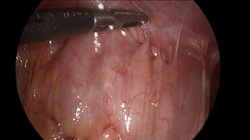
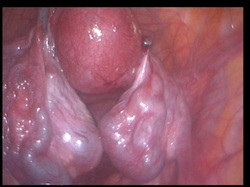
In women with ovarian endometriosis (endometriomas) the general advice is to get them treated. This is usually done by laparoscopy. Some medical studies show that removing these cysts can improve pregnancy rates by up to 50%. It also improve painful sex in women who suffer from dyspareunia and painful periods

Removal of the cyst is usually advised as opposed to just drainage of the cyst as this reduces the risk of recurrence.

The recurrence risk is nearly 100% if the cysts are only drained as opposed to removed where the recurrence risk is less than 10%

A more complete assessment is required for women in whom the cysts recur as repeated operations for endometriomas may reduce ovarian reserve and adversely affect pregnancy rates

In relation to IVF there is still great medical debate, but most would suggest that endometriomas larger than 4cm should be treated prior to IVF.

For most women it is best that they be seen to endometriosis experts in endometriosis centers as this optimizes treatment and reduces the risk of recurrence. 


Picture
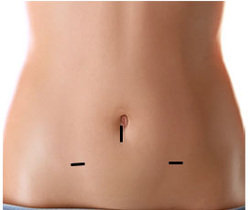
Typical incisions for a laparoscopic ovarian cystectomy


Ovarian cysts are very common. The majority of ovarian cysts are benign (not cancerous). Some cysts given time will disappear by them selves, others will need surgery.


Reasons for surgery would be

1.     Pain that does not improve with simple pain killers

                     a.     This may be a sign of either

                               i.     Bleeding into the cyst

                               ii.     Rupture of the cyst

                              iii.     Torsion of the cyst

2.     A cyst of 5cm or more that is not resolving or increasing in size

3.     If the clinicians are unsure of the nature of the cyst

When surgery is required even for very large ovarian cysts, laparoscopic surgery should be the modality of choice, and most surgery for ovarian cysts are performed as day cases.

The advantage of laparoscopic surgery for ovarian cysts are the fact that

1.     It is less pain full, and less pain killers are required

2.     Hospital stay is less

3.     Recovery and resumption of normal activity is quicker

4.     Blood loss during the procedure is less

5.     Better cosmetic appearance of the scars

The procedure is carried out through an incision in the “belly button” and 2 or 3 small 5mm incisions are often used to insert the fine instruments used for the procedure

Most often women only need to take a few days to a week off work.

It is very rare particularly if the cysts are benign for traditional open surgery to be necessary. I would always advise women to seek a second opinion if they encounter surgeons whose primary method of treatment of ovarian cysts is Laparotomy.


Picture


Endometriosis is a condition where tissue similar to the cells that line in inside of the womb are found outside the womb, most commonly in the pelvis.


It is responsible for:

Painful periods

Painful intercourse

Pelvic pain

Infertility.

The diagnosis of endometriosis. Why does it take so long?

Endometriosis should be diagnosed based on symptoms, however it is not uncommon for women to go for many years with the symptoms mentioned above without a definitive diagnosis.

In some countries it takes up to 7 years before definitive diagnosis is made in some women.

Reasons for delay in diagnosis include

Knowledge of healthcare professional looking after the woman 

The type of symptoms women present with

Influence of pressure groups

Consequences of Delay in

Delay in diagnosis leads to physical, emotional, financial and social consequences.

Because pain can be unrelenting, women may withdraw from social contact as a result of their symptoms and have to take a lot of time off work

Making a diagnosis is important as it provides women with

An explanation for their symptoms hopefully in a language they can understand

Allows them to become aware of strategies to control their symptoms

Allows them to plan their lives around a potentially debilitating disorder.

Endometriosis is progressive in up to a third of women which is another reason for early diagnosis.

If women have these symptoms they need to speak to their doctor. If they do not get a response or are unsatisfied they should always seek a second opinion


Picture
Image showing endometriosis of the ovary
What is endometriosis?

Endometriosis is a condition where cells that normally line the inside of the womb find themselves outside the womb.  These cells can find themselves anywhere in the pelvis: on the bladder, on bowel, on the ovaries or on the ligaments that support the womb.

They can be found on the appendix and on occasion in any organ of the body.


How common is endometriosis?

Endometriosis affects between 5-10% of the general female population

In the United Kingdom about 2 million women of reproductive age suffer with endometriosis.

It is commoner in women who find it difficult to get pregnant and have children; it is also commoner in women who have painful periods.

It tends to run in families; about 10% of women who have endometriosis will have a family history of this condition.

What causes endometriosis?

No one knows exactly why some women have endometriosis and others do not.

A number of theories have been put forward to the possible causes. No single theory can explain the reason for endometriosis in all women who are diagnosed with it.

1.     Spillage of cells through the fallopian tubes during periods.

During menstruation about 90% of women will have some spillage of menstrual cells through the fallopian tubes into the abdominal cavity (into the tummy). For most women the body absorbs these cells. In women who develop endometriosis it is thought that these cells are not entirely absorbed. The body then tries another way of protecting itself from these cells. In some women it forms adhesions to block these cells off from the rest of the body. This process may be due to altered immunity in some women.

2.     Transport of menstrual cells through the blood stream

Some scientists believe that the cells travel through the blood to reach other organs of the body. They believe that this is why endometriosis can be found in organs far away from the pelvis

3.     Normal cells can change into endometriosis cells

Other scientist thinks that we are born with cells that have the potential to transform themselves into other cells under certain conditions. And in certain women these cells are triggered by unknown mechanisms to become endometriosis cells

Symptoms of endometriosis:

Endometriosis is not cancer but can be responsible for a variety of symptoms, which include:

1.     Pelvic pain

a.     Pain during periods (cyclical pain)

b.     Pain when not having a period (non cyclical pain)

c.      Pain when opening bowels

This pain may be due to endometriosis on the bowel or endometriosis on the ligaments that support the womb.

 Some women describe this type of pain as worse when they are having periods

d.     Pain during sexual intercourse

e.     Pain on emptying the bladder. This may be due to endometriosis on the bladder

The pain of endometriosis is often described as central lower abdominal pain that can radiate round to the lower back and down the legs

other symptoms include bladder symptoms like going to empty the bladder very often (frequency), or blood in faecal motions (in stool)

2.     Infertility

There is a well-documented link between endometriosis and infertility.

Endometriosis can be responsible for fertility problems in up to 50% of women who have it. However things to note are:

1.     The majority of women who have endometriosis will get pregnant with not problem and the pregnancy will be without problems.

2.     Problems related to endometriosis depend sometimes on the stage of endometriosis

3.     The more advanced the endometriosis the more fertility becomes and issue.


Picture
Image showing locations of endometriosis
 
 
Picture
A dermoid cyst of the ovary (also known as a germ cell tumor or teratoma) is a peculiar type of cyst, as it can contain tissue from any part of the body. They can contain hair, teeth, glands that secrete fatty tissue (sebum). In some cases they can contain thyroid gland tissue and produce symptoms related to the thyroid gland. They may also contain neural tissue or bone.

Dermoid cysts are one of the commoner types of ovarian cyst and are often seen in women of reproductive age, they are the commonest cyst under the age of 30years and are usually benign (meaning they do not go on to cause cancer). In about 15% of women who have ovarian dermoid cysts will have them on both ovaries.

The symptoms from dermoid cysts are the same as with any other cyst of the ovary

They may be asymptomatic (produce no symptoms)

Or can cause abdominal pain

They can undergo torsion (twisting of the pedicle of the ovary)

They can grow to a large size and cause pressure on the bladder (resulting in going to pass urine often)

Or cause constipation in they exert pressure on the bowel.

Very rarely they can rupture and release the fluid they contain into the abdomen causing irritation and pain.

Dermoid cysts are typically diagnosed by ultrasound.

Once diagnosed if they cause no symptoms and are under 3cm women may be advised to do nothing and just keep things under surveillance with serial ultrasound scans 3 months apart and only advised to have intervention if they increase in size or become symptomatic.

Once treatment is advised the gold standard management often irrespective of size is operative laparoscopy (keyhole surgery).

Such surgery is often carried out as a day case.

Once the cysts are removed and histology is normal. It often not necessary for routine follow-up with scans for fear of recurrence of the cysts.

Whether women need to be seen again will depend on their symptoms. If the symptoms come back see your doctor then.

Removal of the cysts do not affect future fertility


Picture
Opened dermoid cyst showing hair and sebum
 
 
Picture
Adenomyosis is where the tissue from the lining of womb penetrates into the muscle.
it can occur in the younger woman but is more common in women who have had children.
Adenomyosis is often responsible for heavy, painful periods and for the younger patient can be responsible for infertility.
it is sometimes difficult to diagnose adenomyosis as it can be confused with fibroids and or endometriosis. The final diagnosis is often made on histology after hysterectomy. As not all women are at a stage where they can have a hysterectomy or for women who do not want to have hysterectomy other therapies are available.
Medical management may be with:
hormonal therapy
Mirena IUS
or simple painkillers during the period time.

Some women may consider surgery. Laparoscopic surgery is probably the best remove the adenomyosis. The surgery is performed in a similar way to laparoscopic myomectomy, but because the margins of adenomyosis within the uterus is not as well defined as fibroids usually are, some of the adenomyotic tissue may be left behind. For some women this will provide symptomatic relief of their symptoms till they have finished having children and may then go on to have a hysterectomy.


Picture
uterus with adenomyosis being removed with harmonic scalpel
Picture
during removal of adenomyosis. It should be noted that the adenomyoma is not as smooth as a fibroid
Picture
uterus repaired laparoscopically after removal of the adenomyosis
 
 
Picture
Ovarian cyst on left ovary

A cyst is a closed sac, divided by a membrane from its surrounding structures.

Cyst can contain fluid or semi-solid components, and can occur in any structure in the body.

The ovary if part of the female reproductive system, and is responsible for the production of hormones, and “eggs”

The ovary in its development is made of 3 different parts and in any of these parts cysts can develop.

Functional ovarian cysts

The commonest type of cyst is a functional cyst, which forms as a consequence of the menstrual cycle.

During the menstrual cycle the ovary is very dynamic, in combination with other organs prepares for ovulation (the production of an egg).

In the first part of the menstrual cycle a few follicles are stimulated within the ovary, one of these follicles becomes dominant whilst the others are supposed to go back to sleep. If one of these non-dominant follicles persists in can swell with more fluid and become a FOLLICULAR CYST.

If ovulation takes place, in the second part of the cycle the ovary prepares for the possibility of fertilization, and a Corpus luteum forms with the aim of supporting a baby if fertilization takes place. If fertilization doesn’t take place this corpus luteum gets absorbed and the whole cycle starts again. If it persists even if ovulation does not take place it can become a LUTEAL CYST.

These are functional cysts and usually resolve spontaneously without any treatment. Even if women have symptoms of pain, simple analgesia is often sufficient whilst the cyst spontaneously resolves.

If the pain is bad it is best to be checked by the doctor, who will organize an ultrasound scan just to ensure that the cyst is not bleeding and that the cyst is not very large.

Once the symptoms subside a follow up scan is arranged for 6 weeks after the first presentation to ensure that the cyst has spontaneously resolved.


Picture
Fibroids are benign growths of the muscle of the womb.

They are common and depending on race or age can be present in up to 30-40% of women.

Fibroids can be responsible for

Heavy periods

Urinary and bowel symptoms (due to pressure that large fibroids can exert on the bladder and bowels).

Fertility problems.

Though there are minimal access methods of treating fibroids, and increasingly more and more women benefit from laparoscopic myomectomy and transcervical resection of fibroids, some women will still require open surgery for the treatment of their fibroids.

An open myomectomy is where you have the operation through a traditional cut. Either a cut above the bikini line, or from the belly button downward. The way the cut is done is usually dictated by the size of the fibroid.

The most important factor for success in the treatment of fibroids is individualization of treatment based usually on:
Symptoms
Age
Desire for future fertility
Desire to retain womb even if fertility is not desired (this topic I have discussed in a previous blog).

Surgical considerations:
From the surgeons point of view the most important consideration as well as the above would be access to the fibroids. If it is possible to get round the fibroids it may be possible to perform the procedure laparoscopically irrespective of size (fibroids of more than 1Kg can be removed laparoscopically). (In my forth-coming publication regarding the laparoscopic management of fibroids in my unit we report laparoscopic management of a fibroid weighing 920g since then we have removed fibroids with a cumulative weight of more than 1kg).

The number of fibroids is also not a contraindication to laparoscopic surgery but the greater the number of fibroids the more complicated the procedure becomes.

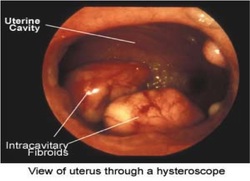
Location of the fibroids are also important if there is one in the cavity of the uterus and the rest are on the outside and are not too many it is possible to combine transcervical resection of the fibroid with laparoscopic myomectomy.

However if there are large numbers in both locations and poor access then an open procedure will be required.

For women needing this type of surgery the one important factor is the experience of the unit and the surgeon undertaking the procedure. In terms of numbers and success of the operations they have performed.

Some of the most important complications to take into consideration are the adhesion risk as this can result in intestinal obstruction and fertility problems as well as pelvic pain. Infection and bleeding are also important factors to take into consideration. Infection increases the risk of adhesion formation and subsequent loss of potential fertility


Picture
laparoscopic view of left ectopic pregnancy
What is an ectopic pregnancy?

Ectopic pregnancy is a pregnancy that implants itself outside the womb.

The commonest site is the fallopian tube, however ectopic pregnancy can implant in the ovary, in the abdomen, and on the cervix. With the rising number of Caesarean sections it is also possible for ectopic pregnancies to occur in previous caesarean section scars.

What are the symptoms of ectopic pregnancy?

The commonest triad of symptoms is abdominal pain, vaginal bleeding after missing a period.

Symptoms commonly occur at about the 6th week of pregnancy, typically women would have missed a menstrual period.

Missing a period however is not always noticed because of the vaginal bleeding the ectopic pregnancy itself causes. Thus some women may have bleeding because of the ectopic pregnancy and mistake it for a period.
if the pregnancy has ruptured symptoms will include:

  • vomiting
  • dizzy spells
  • fainting spells
  • shoulder tip pain

other uncommon and unusual symptoms, diarrhoea

Why ectopic pregnancy is so dangerous?

Pregnancies that implant in the fallopian tubes cannot survive. This is because the fallopian tube is too narrow to accommodate the developing pregnancy. If the pregnancy goes unnoticed it expands the fallopian tube beyond its limit, and the fallopian tube ruptures. If this happens, it is life threatening and on occasion fatal.

Though deaths from Ectopic pregnancy are rare it remains the leading cause of maternal death in early pregnancy.

Most deaths that do occur is as a result of women not knowing they are pregnant and thus there is a delay in presentation and diagnosis. In others though they present in reasonable time, making the diagnosis is delayed.

For these reasons it is important that women are made aware of symptoms and doctors other than gynaecologists are aware of how to make a prompt diagnosis of ectopic pregnancy.

Any woman of childbearing age who is presents with abdominal pain with or without vaginal bleeding should be suspected of having an ectopic pregnancy until proven otherwise.

A brief history and current status

In ancient times and maybe not so long ago, the majority of women who had ectopic pregnancy would not know until the pregnancy ruptured, and they would present with life threatening haemorrhage. Up until the early to mid 1900s 80% of ectopic pregnancies were detected after rupture. More commonly today more 80% are detected before they rupture.

This has been due to advancement in ultrasound and in understanding of the hormone b-HCG (the hormone of pregnancy), and education on the signs and symptoms of ectopic pregnancy

How often does ectopic pregnancy happen?

Ectopic pregnancy as a general rule occurs in 1-2 in 100 pregnancies in the general population. However the true risk will depend on risk factors. 


Picture
ultrasound view of ectopic pregnancy
What are the risk factors for ectopic pregnancy?

Majority of women who have ectopic pregnancy will have no risk factors. Therefore it is important that any women who is pregnant and complains of abdominal pain in early pregnancy, ectopic pregnancy needs to be excluded.

Factors that can increase the risk of ectopic pregnancy include:

  • Previous pelvic infection:

Pelvic inflammatory disease affects about 11% of the female population. Unfortunately not all women who have this infection have symptoms. In the majority of women symptoms go unnoticed. And sometimes it is only after the diagnosis of ectopic pregnancy that sequelae of PID are found. About 10% of women who have had PID will go on to develop ectopic pregnancy

  • Previous tubal surgery

  • Current use of an intrauterine contraceptive device

For the majority of women in whom the ‘coil” fails the pregnancy will be in the womb. However ectopic pregnancy is also common. A pregnancy test needs to be done and if it is positive a pelvic ultrasound scan needs to be arranged to exclude ectopic pregnancy

  • Previous sterilization

When sterilization fails it is more than likely that the pregnancy will be in the uterus, however there is a good chance that it will be in the fallopian tube. For this reason if a woman has been sterilized and misses a period and feels she may be pregnant it is important to get a pregnancy test. If this is positive she needs to make sure she doesn’t have an ectopic pregnancy by getting an ultrasound scan. This can be done in early pregnancy assessment units or via the GP

  • Previous history of ectopic pregnancy

Women who have had a previous ectopic pregnancy have a 10% risk. This could be interpreted a number of ways. If they were to get pregnant 10 times one would be an ectopic.
If a woman has had 2 previous ectopic pregnancies the risk increases to 25%

  • Assisted reproduction (IVF)

Other risk factors for ectopic pregnancy are

  • Previous pelvic surgery

  • Endometriosis 


Google